Anúncios
Limited storage is the defining challenge of small apartment living. There are only so many cabinets, only so much closet space, and only so much floor area to work with. The instinct is often to buy more furniture — another dresser, another bookshelf, another set of bins — but adding furniture to a small space usually makes it feel smaller and more cluttered, not more organized.
The better approach is to maximize the storage you already have before adding anything new, and when you do add storage, to choose solutions that are space-efficient, budget-friendly, and visually clean. This guide covers both.
Start by Maximizing Existing Storage
Before spending a dollar on new storage solutions, extract maximum value from what you already have. Most apartments have more unused storage capacity than people realize — it’s just buried under poor organization.
Anúncios
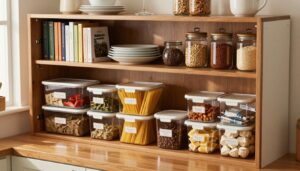
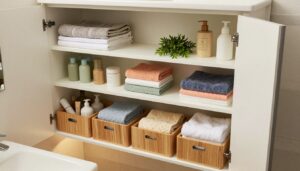
Cabinets are the most common example. A standard kitchen cabinet with one fixed shelf typically uses only about half its vertical space. Adding a second shelf or a stackable shelf riser immediately doubles the usable capacity of the cabinet without any permanent modification. The same principle applies to bathroom cabinets, bedroom wardrobes, and any other enclosed storage.
Closets are another area of chronic underutilization. Most standard closets have a single hanging rod and a shelf above it — a configuration that works reasonably well for long items like dresses and coats but wastes the lower half of the space when hanging shorter items like shirts and jackets. Adding a second hanging rod below the existing one, using the floor for a shoe rack or storage bins, and adding shelf dividers above creates a significantly more organized and higher-capacity closet without structural changes.
Think Vertically
In a small apartment, floor space is the scarcest resource. The solution is to move storage upward. Walls are underused in most apartments, and the space between the tops of furniture and the ceiling is almost always wasted entirely.
Anúncios
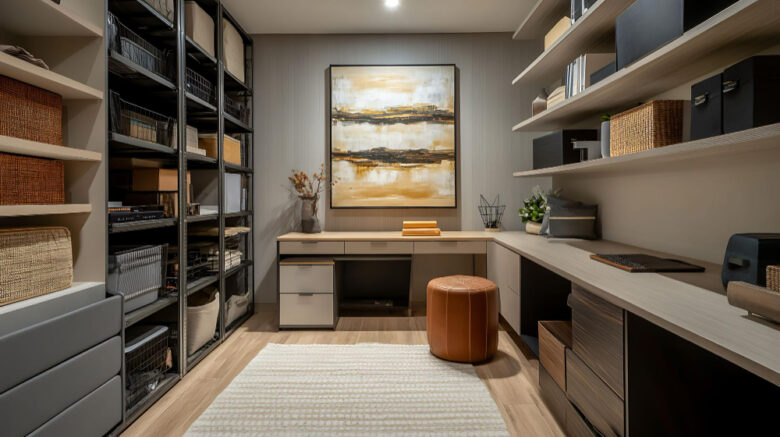
Floating shelves are one of the most versatile and cost-effective storage tools available. They add display and storage space without consuming floor area, can be installed at any height, and work in almost every room. In the living room, a row of floating shelves above a sofa or along a blank wall handles books, plants, and decorative objects. In the kitchen, floating shelves above the counter provide accessible storage for frequently used items. In the bedroom, shelves above the desk or flanking the bed replace side tables while adding more storage.
For renters who can’t drill into walls, there are alternatives. Tension pole shelving units stand between floor and ceiling without any wall attachment. Freestanding ladder shelves lean against the wall with no hardware required. Apartment Guide has a useful roundup of storage solutions specifically for renters who need to avoid permanent modifications.
Use Furniture That Works Double Duty
In a small apartment, furniture that serves only one purpose is a luxury you often can’t afford in terms of space. Replacing single-function pieces with multi-function alternatives is one of the highest-impact changes you can make.
An ottoman with a hinged lid provides seating, a coffee table surface, and hidden storage in one piece. A bed frame with built-in drawers replaces a separate dresser and utilizes space that would otherwise be empty under the bed. A dining bench with storage inside handles seating and replaces a separate storage unit. A console table behind the sofa provides a surface and, with a few baskets below, significant storage.
When shopping for furniture for a small apartment, always ask whether the piece could do more than one job. If it can’t, consider whether there’s a version that does.
The Best Budget Storage Products
There are a handful of low-cost storage products that consistently deliver outsized results in small apartments. These are not premium solutions — they are inexpensive tools that solve specific problems effectively.
Over-the-door organizers turn the back of any door into storage space. They work on bathroom doors for toiletries and cleaning supplies, bedroom doors for shoes and accessories, and kitchen doors for spices and small items. They require no drilling and leave no marks.
Under-shelf baskets clip onto the underside of existing shelves and add a second storage tier with no installation. They’re particularly effective in kitchen cabinets and pantries.
Stackable bins and boxes with lids maximize vertical space in cabinets and on shelves. Uniform sizes and colors also reduce visual clutter significantly compared to a collection of mismatched containers.
Vacuum storage bags compress bulky seasonal items — duvets, winter coats, extra pillows — to a fraction of their normal size. Under-bed storage of compressed seasonal items is one of the most effective space-saving moves in a small apartment.
IKEA remains one of the best sources for budget apartment storage, particularly the KALLAX shelving system, the SKUBB storage boxes, and the ALGOT/BOAXEL closet systems. IKEA’s small space storage ideas page shows how these products can be combined for different room types.
The Kitchen: Where Storage Matters Most
Kitchen storage directly affects how functional your apartment feels day to day. A disorganized kitchen — where you can never find what you need, where pots are stacked precariously, where the counter is permanently covered — creates daily friction that wears on you in a way that a disorganized bedroom closet doesn’t.
The most impactful kitchen storage upgrades are cabinet shelf risers to double vertical space, a magnetic knife strip on the wall to free up drawer space, a pot rack or pegboard for pans if wall space allows, and a tiered organizer inside cabinets for spices and small items. Combined, these four changes can transform a cramped kitchen into a functional one without any structural work.
Conclusion
Storage problems in small apartments are almost always solvable without spending a lot of money or adding a lot of furniture. The key is to maximize existing space first, move storage upward before expanding outward, and choose multi-function furniture that earns its floor space by doing more than one job.
Start with one room, one problem at a time. Identify the specific storage challenge that causes you the most daily friction — the kitchen cabinet that won’t close, the closet that spills out when opened, the bathroom with no surfaces — and address that first. Visible progress in the most painful areas builds momentum for the rest.

I’m Daniel Carter, a designer based in Chicago with a passion for making small spaces work smarter. After years of living in cluttered apartments, I started experimenting with simple, low-cost organization systems that actually stuck. At Daily Dicas, I share what worked for me — practical tips for anyone who wants their home to feel calmer, more functional, and more intentional.