Anúncios
I moved many times over the past twenty years and faced a wide range of layouts in each home. Those moves taught me that a smart approach to storage changes daily life for the better.
This short guide shows how to use available space effectively. It focuses on choosing solutions that match your habits and the items you use most.
Anúncios
We will cover how to place heavy pots, stack dishes, and tuck away small pantry goods so everything stays easy to reach. The right setup helps you store more while keeping chores quick and stress-free.
By following a few simple strategies, you can turn any set of cabinets into a tidy, efficient workspace that supports daily cooking and meal prep.
Mastering Kitchen Cabinet Organization
Good storage starts with a clear plan and a quick survey of what you actually use every day. Note the items you reach for most and where you trip over clutter.
Anúncios
Assess current shelves and decide which areas need inserts or dividers. Brands like KraftMaid and Masterpiece make base cabinet inserts and plate organizers that fit inside kitchen cabinets to protect plates and create more usable storage.
- Keep everyday plates and serving pieces within easy reach.
- Use plate organizers or partitions to prevent chips and to stack safely.
- Customize with inserts so deep shelves hold tools without losing access to the back.
When you plan placement around how you cook, finding items becomes faster and less messy. A small investment in the right solutions gives long-term payoff: fewer broken plates, clear counters, and a home that feels easier to live in.
Managing Cookie Sheets and Cutting Boards
A tall stack of baking sheets and cutting boards can turn a quick meal into a scavenger hunt. Taming that pile frees up space and makes prep faster.
Using Dividers
Install 18″ metal dividers secured to the base and back to hold sheets and boards upright. These dividers keep cutting boards and cookie sheets on their sides, so you use vertical space better.
Free-standing Racks
If you want a less permanent fix, choose free-standing racks. They separate boards and sheets without drilling. Move them as needed and keep the back of the cabinet usable.
- Use 18″ metal dividers to store boards upright and cut clutter.
- Free-standing racks are inexpensive and require no installation.
- Upright storage stops heavy stacks and makes each item easy to grab.
- These organizers free counter space and make the back of your cabinet work harder.
Optimizing Pan and Lid Storage
Simple pan storage upgrades can free shelf space and protect your cookware. A focused approach makes it easier to reach the right pan or pot when you need it. Use a dedicated rack to keep everything neat and scratch-free.
Organizing Pot Lids
- Choose a specialized pan rack: it saves space and holds pans and lids upright.
- Place the organizer on its end or side, or set it in a deep drawer for easy access.
- Keeping lids and pots in one rack prevents scratching and speeds up finding items.
- Adjustable racks adapt to most kitchen cabinets and drawer widths for a custom fit.
Investing in a quality pan organizer is a smart way to get more use from your cabinet space while protecting valuable pans and pots. This small change makes daily cooking smoother and tidier.
Upgrading Trash and Recycling Solutions
A simple pull-out system can change how you handle trash and recyclables. A double pull-out trash bin add-on fits any base cabinet that is at least 15″ wide.
This upgrade keeps bins hidden and frees up surface space. You get a cleaner look and faster daily cleanup.
Separating waste becomes easier with two bins. One holds regular trash and the other stores recyclables so sorting is immediate.
- Double pull-out units are top storage solutions for small spaces.
- They fit cabinets 15″ wide or larger and install with basic tools.
- Keeping bins tucked away helps maintain a tidy cooking area and saves floor space.
- Having dedicated bins speeds disposal of common items and supports recycling habits.
Installation is straightforward and often a one-day project. Adding this system improves how your kitchen cabinet space works and makes cleanup less of a chore.
Maximizing Drawer Space with Tiered Dividers
A two-tiered insert makes one drawer feel like two, without remodeling. This simple swap transforms wasted depth into real storage space for everyday tools.
Replace the standard plastic silverware tray with a two-level cutlery divider. The top tray slides back on a smooth track to reveal a second layer below. Store daily forks, spoons, and knives on the top and less-used pieces underneath.
The result is smarter use of drawer depth and fewer loose items rattling around. You keep silverware easy to find and protect delicate pieces from bending or scratching.
- Maximize drawer capacity by using the vertical space a tiered tray creates.
- Top tray access keeps everyday silverware handy while the bottom holds bulkier items.
- Swap the inefficient plastic tray for a tiered system to boost overall cabinet and drawer efficiency.
Streamlining Pantry Shelves with Bins
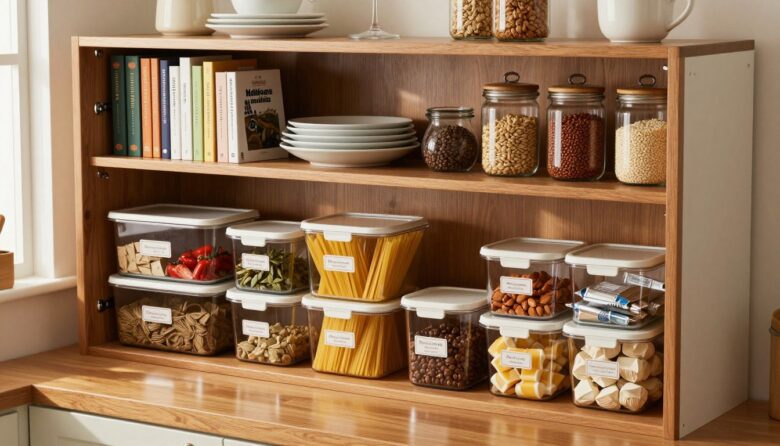
Small containers and a clear plan made my pantry work better. The right sizes kept food from sliding to the back of every shelf.
Pantry Bin Selection
I used four large 6″x16″x5″ deep drawer bins on the top shelf. They grouped snacks and baking mixes so items stayed visible.
On the second shelf I placed three 8″x11.25″x6″ pantry bins. Those fit jars and boxed goods without wasted space.
Using Turntables
Revolving turntables held spices and cooking oils. A lazy susan made it easy to spin and find bottles without reaching to the back.
- Bins and turntables stop food from getting pushed to the back and forgotten.
- Top-shelf 6″x16″x5″ bins and mid-shelf 8″x11.25″x6″ bins gave clear zones for similar items.
- Woven baskets on the bottom shelf held larger bowls and overflow food neatly.
- These solutions made the space simple to scan, so I avoided buying duplicate food items.
Efficient Under Sink Storage Strategies
With a few smart tools, the dark area under your sink can become highly useful. Start by removing everything and noting what you use daily. That quick check shows which bottles, sponges, and towels deserve prime shelf spots.
Roll-out Caddy Benefits
A roll-out caddy makes back-of-cabinet items easy to reach. Slide it out to grab cleaners, sprays, or extra dish soap without crouching or pulling everything forward.
Pair the caddy with a lidded soda can organizer to hold scrubbers below and towels on top. This keeps small pieces tidy and prevents spills from spreading across the shelf.
- Use a slim roll-out tray to work around plumbing and supports.
- Keep dishes for drying and cleaning tools separate to avoid clutter.
- Select durable plastic bins that resist moisture and fit your cabinet width.
- Label small containers so common items are quick to find during daily chores.
These steps turn wasted under-sink space into a neat, functional zone. You’ll reach supplies faster and keep the area clean for years to come.
Utilizing Corner Cabinet Drawers
Corner drawers turn wasted angles into fast-access spots for daily tools. They reclaim hidden space near your cooktop and make reaching small items painless.
Shallow organizers like 6″x15″x2″ and 6″x12″x2″ keep forks, spoons, and other utensils neatly sorted. In my last home those trays cut morning prep time and stopped the constant rummage.
The deeper lower drawers hold 6″x6″x6″ bins for spices, measuring cups, and short utensils. Because the drawers fully extend, every item in the back is easy to see and grab.
- Make awkward corners useful by using tailored drawers and shallow trays.
- Pair small shallow organizers for utensils with deeper bins for spices and cups.
- Choose full-extension drawer slides so nothing gets lost at the back.
Switching from a jumbled pile to this layout changed how I work in the kitchen. Investing in good organizers for those corner cabinets keeps your most-used utensils within reach and your prep time short.
Integrating Charging Stations into Drawers
Adding a hidden charging hub to a drawer clears countertops and keeps devices ready. A Docking Drawer outlet with USB ports fits at the back of a drawer to power an iPad, phone, or small appliances while you cook.
Install the outlet near the rear so cords stay tucked out of sight. Store devices inside the drawer for safe charging and to avoid tangled cords on the counter.
- Keep counters free by charging tablets and phones inside a drawer.
- Use a back-mounted outlet so items charge while you work.
- Protect electronics from spills and clear up prep space in your home.
This modern storage upgrade blends tech with smart use of cabinet and drawer space. It makes managing appliances and screens simpler and keeps the room neat during busy meal prep.
Adding Pull-Out Trays for Extra Utility
A slim pull-out tray can turn a deep, wasted shelf into a tidy work surface. It creates extra storage space for small items that otherwise gather on counters.
I slid a tray into a lower cabinet and used it as a hidden desk. The drawer held pens, envelopes, and a small stapler so I could pay bills quickly. Adding Poppin organizers inside kept everything neat and easy to reach.
These trays work especially well in deep cabinets where the top area goes unused. They give you a flat surface for sorting mail or holding a tablet while you follow a recipe.
- Create extra storage space for loose items and office supplies.
- Use Poppin organizers to keep pens and papers tidy in a single drawer.
- Install a tray to make the top of a deep shelf useful again.
- Simple installation adds utility and expands how your cabinets function.
Leveraging Hidden Toe Kick Drawers
A slim hidden drawer below your toe kick can free up surprising amounts of underused space. These low drawers slide out with a gentle tap from your foot and reveal a long, shallow compartment built for flat goods.
They work well for large trays, cookie sheets, and cutting boards that rarely fit on regular shelves. Storing these items in a toe kick keeps counters clear and gives each piece a dedicated place.
- Use the under-cabinet strip to add practical storage without changing upper layouts.
- The foot-push action makes access hands-free when you are holding pots or pans.
- These drawers maximize total storage space while preserving a clean, seamless look.
- Consider adding toe kick drawers during a remodel to increase usable space efficiently.
Hidden toe kick drawers are a smart way to tuck away hard-to-store sheets and trays. They boost everyday efficiency and keep fragile items safe and out of sight.
Installing Toe Kick Vacuums for Easy Cleaning
A built-in toe kick vacuum turns quick cleanups into a simple foot tap. The Sweepovac model powers on with a stomp and pulls crumbs and dust into a small inlet at the cabinet base.
Place a small dry microfiber mop with a swivel head near the sweep path so dirt travels straight to the inlet. This method prevents scuffing and keeps delicate finishes safe.
- Installing a Sweepovac is one of the best ways to keep the kitchen floor clean without hauling out a heavy machine.
- The vacuum starts with a foot tap and collects debris you sweep toward the cabinet, saving time and effort.
- Bag changes are simple, and the unit tucks into the toe kick, leaving drawer and storage space undisturbed.
- It’s an ideal feature for a remodel because it makes daily cleaning quick and nearly hands-free.
With the unit built into the toe kick you maintain a tidy room in less time. For busy homes, this is a practical way to speed up routine cleaning and protect floors and items at ground level.
Using Motion Sensor Lighting for Dark Cabinets
Motion-activated strips bring instant brightness to hidden areas and cut down on fumbling in the dark. These battery-powered lights mount on the inside of the doors and switch on the moment you open them.
The light reaches the back shelf so you can spot items without shifting a stack. A small strip makes it easy to see jars, tins, or awkward boxes that usually hide in the deep recesses.
- The sensors only run when the doors are open, which saves battery life.
- They work well under sinks and in any deep drawer area where visibility is limited.
- Installation is quick: stick the strip, set the sensor, and test the motion trigger.
Add motion lighting to improve storage access and speed up daily tasks. With a bright interior, every drawer and shelf becomes easier to use and maintain.
Selecting the Right Organizers for Your Needs
A short audit of what you reach for daily makes picking the right storage tools much easier. Measure shelves and drawers, then list the items you use most so everything has a spot.
Match sizes to function. Choose a drawer-friendly tray for forks and spoons, a deep bin for bulky items, and slim dividers for baking sheets. Look for durable materials that will last through frequent use.
- Measure each drawer and door opening before you buy any organizer.
- Group similar items together so one solution serves several needs.
- Pick adjustable organizers when possible to adapt as needs change.
- Favor quality pieces—well-made organizers save time and replace headaches.
These simple steps help you create custom solutions that keep cabinets tidy and tools easy to reach. The right choices cut down clutter and make daily tasks faster.
Maintaining Your Organized Kitchen Over Time
A little attention each day prevents clutter from turning into a major chore. Put items back in their designated place after each use so your system stays useful.
As life changes, reassess storage and swap or add an organizer to fit new routines. A quarterly check helps you remove duplicates, donate extras, and keep things tidy.
Keeping this habit makes daily life smoother and cuts down on frantic searches. Regularly clean drawers and shelves to stop clutter from piling up and to protect items from damage.
- Return items immediately—small actions add up fast.
- Plan seasonal reviews to match storage to your current life.
- Tackle one drawer or shelf per week so clean-outs feel manageable.
Remember, an organized home is a work in progress. Small adjustments often yield big gains, and staying committed keeps your space useful and pleasant for years to come.
Conclusion
A few focused changes can cut frustration and save you minutes on daily tasks. Implementing dividers, pull-out trays, and motion sensor lights helps you store more in less space while keeping the room tidy.
Maintain your system by returning items to their spots and reviewing storage every few months. Small updates over time keep the setup useful as needs change.
Start with one project at a time—measure, pick a solution, and test it. With the right choices you can transform your kitchen into a functional, stress-free space.
Thanks for reading. I hope these tips inspire your next storage refresh and save you time in daily routines.

I’m Daniel Carter, a designer based in Chicago with a passion for making small spaces work smarter. After years of living in cluttered apartments, I started experimenting with simple, low-cost organization systems that actually stuck. At Daily Dicas, I share what worked for me — practical tips for anyone who wants their home to feel calmer, more functional, and more intentional.