Anúncios
Moving into a one-bedroom apartment — or finally deciding to get your existing one under control — can feel overwhelming before you even start. There are too many things, not enough places to put them, and no obvious system to follow. The good news is that organizing a one-bedroom apartment doesn’t require a renovation budget or a weekend off work. It requires a clear plan and a few hours of focused effort.
This guide walks you through every room, from the entryway to the bedroom, with practical steps you can apply immediately regardless of how much space you have.
Start With a Full Walkthrough
Before touching anything, walk through your apartment with fresh eyes. Open every cabinet, drawer, and closet. Take note of what is actually being used and what has been sitting untouched for months. This step is not about organizing — it’s about understanding the real state of your space before you try to fix it.
Anúncios
Most people discover two things during this walkthrough: they have more storage space than they thought, and they own far more things than they actually need. Both of these realizations are useful starting points.
The Entryway: Your First and Last Impression
In a one-bedroom apartment, the entryway sets the tone for the entire space. A cluttered entry — shoes everywhere, keys lost, bags piled on the floor — creates immediate stress before you’ve even taken off your coat.
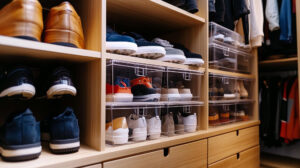
The goal is to create a simple landing system. You need a place for keys, a place for shoes, and a place for bags or coats. You don’t need a dedicated mudroom to achieve this. A small wall-mounted hook rail handles coats and bags. A low shoe rack or a bench with storage underneath handles footwear. A small dish or wall-mounted key hook near the door handles keys and small items like sunglasses or a transit card.
Anúncios
If floor space is extremely tight, consider an over-the-door organizer on the back of your entry door for shoes and small accessories. The Spruce has a solid roundup of entryway organization ideas that work even in the smallest apartments.
The Kitchen: Function Over Everything
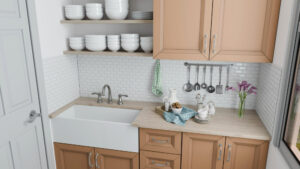
Small apartment kitchens are typically short on counter space, cabinet space, and drawer space — all at the same time. The organizing principle here is simple: keep only what you actually use, and store everything at the point of use.
Start by emptying all cabinets and drawers completely. Before putting anything back, ask whether you have used it in the last three months. Anything that hasn’t been used — duplicate utensils, novelty gadgets, appliances that only get pulled out once a year — goes into a donation box or storage.
When restocking, group items by function and store them near where they are used. Pots and pans go near the stove. Plates and glasses go near the dishwasher or sink. Cutting boards go near the prep area. This sounds obvious, but most kitchen disorganization comes from items ending up wherever there was space rather than wherever they belong.
For cabinet interiors, stackable shelf risers and drawer dividers are among the most effective tools available. They double usable space without requiring any installation. Apartment Therapy’s small kitchen guide covers several low-cost options worth considering.
The Living Room: Create Zones, Reduce Visual Noise
In a one-bedroom apartment, the living room often serves multiple purposes — workspace, entertainment area, reading corner, and sometimes a guest sleeping area. Organizing a multi-use space requires defining clear zones rather than letting everything blend together.
The biggest source of living room clutter is surfaces. Coffee tables, side tables, and shelves accumulate objects that have no designated home elsewhere. The fix is not to buy more storage — it’s to reduce what is on display to only things that are genuinely used or intentionally decorative.
For items that do need to live in the living room — remote controls, chargers, books, throws — use closed storage like ottomans with lids, baskets with covers, or a console table with drawers. The goal is to contain the visual noise so the room feels calm even when it isn’t perfectly tidy.
The Bedroom: Protect Your Sleep Space
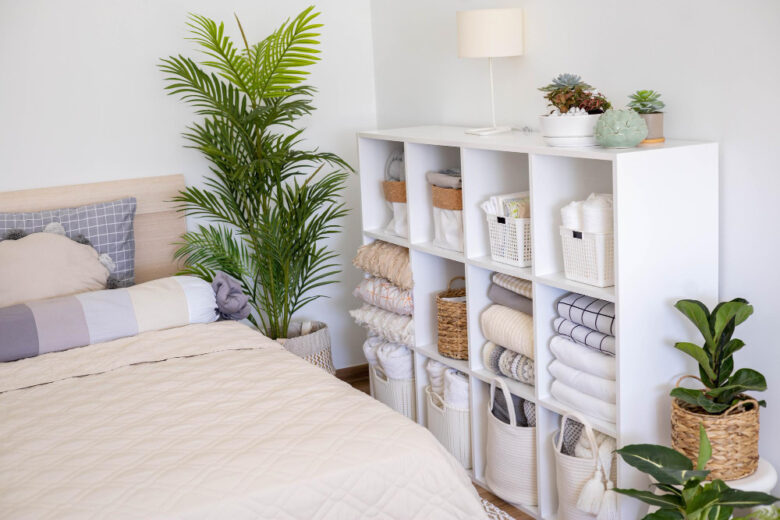
The bedroom has one primary function: rest. Everything in it should support that function. Clutter in the bedroom — clothes on chairs, items piled on the nightstand, a closet that spills out every time you open it — has a direct negative impact on sleep quality and morning routine efficiency.
Start with the nightstand. It should hold only what you need within arm’s reach at night: a lamp, phone charger, water glass, and perhaps a book. Everything else comes off.
The most impactful bedroom organization project in any small apartment is the closet. A disorganized closet leads to the “chair pile” — clothes that aren’t dirty enough to wash but don’t have a clear place to go back to. Solving the closet solves the chair. Invest in uniform hangers, use shelf dividers for folded items, and add a second hanging rod if your closet allows. The Good Housekeeping closet organization guide offers practical ideas for both small and standard closets.
The Bathroom: Small Space, Big Impact
Apartment bathrooms are almost always small and almost always under-organized. The challenge is that bathrooms accumulate products quickly — skincare, haircare, cleaning supplies, medications — while offering very little storage space.
The most effective organizing move in a small bathroom is going vertical. Over-the-toilet shelving units, wall-mounted organizers, and door-back hooks all add storage without taking up floor space. Inside the cabinet under the sink, use stackable bins or a two-tier shelf riser to create organization in what is usually a dark, cluttered space.
Do a product audit before organizing. Most people have expired medications, half-empty duplicates, and products they no longer use taking up valuable space. Clearing these out first makes the organizing step significantly easier.
The System That Keeps It Organized Long-Term
The hardest part of apartment organization isn’t the initial setup — it’s keeping it that way. The reason most organized spaces fall back into chaos is that there’s no maintenance system.
The most effective maintenance habit is the daily reset: a 10 to 15-minute routine at the end of each day where everything gets returned to its designated place. This is not cleaning — it’s resetting. Dishes go in the dishwasher, clothes go in the hamper or back in the closet, surfaces get cleared. Done consistently, this habit prevents the gradual drift back into disorder that undoes most organizing efforts within weeks.
Conclusion
Organizing a one-bedroom apartment from scratch is not a one-afternoon project — but it doesn’t have to take forever either. Work through one room at a time, start with a declutter before adding any storage solutions, and build a simple daily reset habit to maintain what you’ve created.
The goal is not a perfectly styled apartment that looks like a magazine shoot. The goal is a space that works for how you actually live — one where you can find what you need, relax without visual stress, and spend your energy on things that matter more than looking for your keys.

I’m Daniel Carter, a designer based in Chicago with a passion for making small spaces work smarter. After years of living in cluttered apartments, I started experimenting with simple, low-cost organization systems that actually stuck. At Daily Dicas, I share what worked for me — practical tips for anyone who wants their home to feel calmer, more functional, and more intentional.