Anúncios
I’ve spent years sorting dresser, kitchen, and bathroom compartments to find systems that actually last. This short guide shares practical storage solutions I tested to save you time and stress.
Many people let a junk drawer collect random tools and supplies until it slows them down. With a few simple organizers and a repeatable system, you can keep items visible and easy to grab.
Anúncios
Whether you’re tackling an office desk or a chaotic vanity, these ideas will help restore order fast. I’ll also point out the exact products I use with affiliate links so you can buy the same reliable solutions.
Follow this guide and you’ll learn how to maintain storage space so the mess never returns. A small, consistent effort transforms the room and makes daily life calmer.
Understanding the Psychology of Drawer Clutter
Clutter often starts when we treat small storage spaces as catchalls rather than places with purpose.
Anúncios
Research shows that five minutes of daily tidying can cut clutter by up to 60 percent in busy households. That small habit beats occasional marathon cleanups.
People usually let drawers become chaotic because there is no clear system for the items they use most. When there are no boundaries, things drift into every compartment.
- Reduce decision fatigue by grouping similar items together.
- Set simple rules: one zone for tools, one for stationery, one for personal care.
- Daily micro-tasks keep small messes from growing into overwhelm.
A tidy home, including neat drawers, supports calm and control. Categorizing what you keep lowers stress and speeds daily routines.
Essential Drawer Organization Tips for Every Room
A few smart choices can turn chaotic compartments into reliable spots you use every day. Start by deciding what belongs in each space, then pick simple inserts that match those needs.
Bedroom Storage Strategies
Use the KonMari folding method so every garment sits upright and visible. This makes it easy to spot socks or tees without digging through piles.
IKEA SKUBB boxes work well as inserts for socks, belts, and small accessories. Place three to five narrow boxes across a dresser to create neat lanes.
- Filing clothes lets you see everything at a glance.
- SKUBB inserts create consistent sections that stay tidy.
- Choose a pretty liner to protect wood and add a finished look.
Bathroom Drawer Hacks
Two three-part organizers side-by-side are great for corralling hair ties, brushes, and everyday supplies. They keep small items from shifting when you open a drawer.
6″ x 6″ acrylic bins are ideal for nail supplies, lotions, and creams. Clear bins make it fast to find what you need and keep surfaces clean.
- Combine dividers with acrylic bins for layered storage solutions.
- Label front edges so replacement takes seconds and saves time.
- Apply the same approach at an office or kitchen to keep tools and utensils arranged.
Preparing Your Space for a Successful Declutter
Begin with a plan: gather supplies, clear a surface, and adopt a simple sorting method. This keeps the job focused and fast.
Follow AARP’s advice and collect donation boxes, clear plastic bags, and cleaning materials before you start. Place everything near the work area so you don’t stop mid-sort.
The University of Singapore recommends four categories: keep, donate, recycle, and discard. Use those labels as you handle each item to speed decisions.
- Empty each drawer completely onto a clean surface so you can see all items at once.
- Work one compartment at a time to avoid overwhelm when you have many drawers.
- Create a simple plan for storage solutions before you return anything.
- Be ruthless: emotional attachment often keeps unused stuff in place.
- After clearing the space, set up a system that supports daily use and easy maintenance.
Mastering the Art of Sorting and Categorizing
Start by setting a timer and commit to moving every piece through four clear piles. A focused session saves time and stops indecision.
The Four Category Sorting Method
Use four labeled groups: Keep, Donate, Recycle, and Discard. Keep means you used the item in the last six months. Donate is for things in good condition. Recycle covers paper and plastic. Discard is for broken or unsafe pieces.
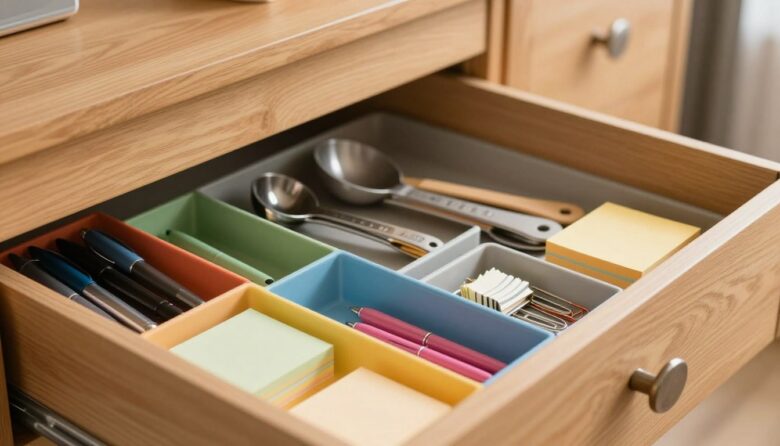
- Group items like pens, paper clips, and post-its together to create a logical, efficient storage plan.
- Dedicating a short block of time ensures your kitchen and office drawers hold only what you use.
- Modular organizers help keep each category separate so the system stays tidy.
- Be honest about need; freeing space reduces wasted effort later.
| Category | When to Keep | Example Items | Action |
|---|---|---|---|
| Keep | Used in 6 months | Daily tools | Return |
| Donate | Good condition | Extras | Box up |
| Recycle | Paper/plastic | Packaging | Bin |
| Discard | Damaged | Broken | Trash |
Selecting the Right Organizers for Your Needs
A clear choice in materials and a correct fit make all the difference when you upgrade small storage. Pick options that match your daily habits and the items you use most. Good selections save time and reduce waste.
Material Considerations for Durability
Bamboo is a sustainable, moisture-resistant option ideal for kitchen and bathroom drawer organizers, according to the National Home Organization Association. It looks warm and stands up to humidity.
Plastic organizers are affordable and easy to clean, so they work well in an office or bedroom. Metal wire dividers give ventilation and long-term strength for high-moisture zones like the kitchen.
Measuring for a Perfect Fit
Always measure length, width, and depth before buying any organizer. A tight fit prevents shifting and wasted space. Consider the size of the items you store so nothing gets crammed or lost.
| Material | Best Use | Key Benefit |
|---|---|---|
| Bamboo | Kitchen, bath | Moisture-resistant |
| Plastic | Office, bedroom | Easy to clean |
| Metal wire | Kitchen | Ventilated, durable |
- Use a simple comparison table to choose the right material for your lifestyle.
- Quality drawer dividers are an investment that keeps supplies separated and accessible each day.
Creative Solutions for Kitchen and Office Drawers
Smart layouts in the kitchen and home office let you find what you need in seconds.
In the kitchen, diagonal organizers help store long utensils and prevent them from piling up. Vertical dividers work great for cutting boards and baking sheets to save horizontal space. For heavy flatware, expandable bamboo dividers stop shifting and add a warm, durable finish.
In an office or a messy junk drawer, ice cube trays make excellent mini bins for small supplies like binder clips, USB drives, or jewelry. Ziplock bags are handy to bundle cables and chargers so they don’t tangle when you open a compartment.
- Use a pegboard or shallow rack to store bakeware near kitchen drawers for fast access.
- Create a knife drawer to clear counter space and keep blades secure and out of view.
- Try repurposed containers to fit odd sizes — the right size insert saves time and mess.
These simple storage solutions turn cluttered spaces into efficient zones. With a few smart organizers and dividers, every item can have a clear, useful spot.
Maintaining Order in Busy Households
When life gets hectic, flexible storage that adapts to routines saves time and stress. Small systems that everyone understands keep rooms usable and calm.
Daily Reset Routines
Spend five minutes each evening returning items to their spots. The Research Institute’s Family Clutter Study shows that flexible storage is key for busy families.
Use labeled organizers so people know where supplies belong. This reduces decision time and cuts daily friction for everyone in the home.
- Set a five-minute timer to put back items from the kitchen and bedroom compartments.
- Encourage kids to return school supplies to a designated zone; it builds responsibility.
- Keep one simple system per room so replacements are fast and consistent.
Small nightly habits prevent clutter from returning and protect the time you want to spend on life, not sorting. Over weeks, a steady reset routine becomes effortless and keeps storage working for your household.
Advanced Techniques for Long-Term Tidiness
Long-term neatness relies on flexible storage solutions that grow with your family. Plan for reconfigurable inserts and modular units so the system adapts as needs change.
Use magnetic strips in a bathroom or metal drawer to hold grooming tools steady and free up flat space. Pegboards with wooden dowels keep makeup brushes and art supplies upright so they do not shift.
- Invest in a quality knife block made for drawers to keep blades safe and counters clear.
- Add dividers and a versatile organizer that can be moved between kitchen drawers and the office as needs shift.
- Create a simple digital inventory of key items to avoid duplicates and curb excess supplies.
Reassess kitchen drawers and office supplies every season. Remove what you no longer use, donate extras, and tweak inserts. These advanced methods keep your room functional and your storage effective for years.
Conclusion
Consistent habits matter more than expensive products when you want lasting order. Use simple routines to protect the work you do now.
Choose a few well-fitting organizers and dividers so items stay visible and easy to return. A single five-minute reset each evening keeps a junk drawer or a kitchen compartment from sliding back into chaos.
Start small: tackle one drawer at a time and build momentum. If you have questions about specific storage solutions, revisit the sections above for product ideas and how-to steps.
Take the time to sort once, keep a short daily habit, and you’ll save time and stress every day.

I’m Daniel Carter, a designer based in Chicago with a passion for making small spaces work smarter. After years of living in cluttered apartments, I started experimenting with simple, low-cost organization systems that actually stuck. At Daily Dicas, I share what worked for me — practical tips for anyone who wants their home to feel calmer, more functional, and more intentional.