Anúncios
Keeping a tidy home can feel like a constant burden. Writer Yara Simón noted on March 7, 2025, that a daily plan eases the mental load of upkeep and makes life feel simpler.
Instead of tackling the whole house in one long session, break chores into short tasks. As OlgaPS/Shutterstock suggests, this approach stops you from spending hours on one big day of work.
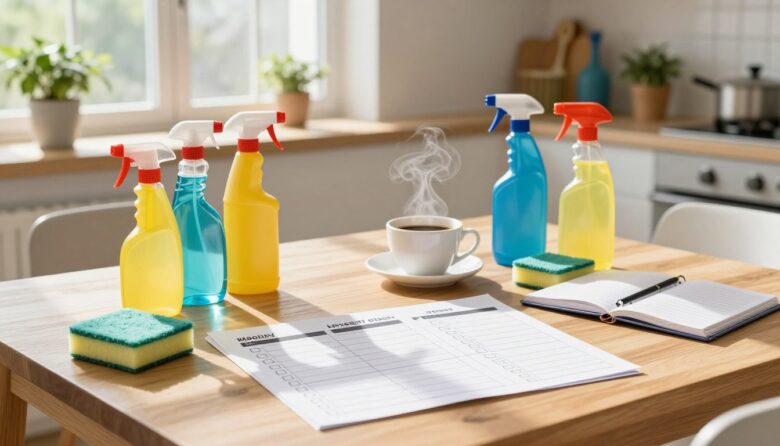
Use a simple checklist to cover every area—kitchen counters, bathroom surfaces, floors, and beds—so nothing gets missed. A short, steady routine helps balance family time, kids, and job demands without last-minute deep clean stress.
Anúncios
Ready to get started? Small steps, set minutes, and a clear list make the process manageable. Over time, this plan turns into a habit that keeps your place calm and welcoming.
Why You Need a Consistent Weekly Cleaning Schedule
A steady routine keeps small messes from turning into overwhelming projects. A structured plan prevents clutter and makes upkeep feel doable for busy people.
Include family members on chore day. Assign simple tasks so everyone helps and stays accountable. That shared effort speeds up work and builds good habits in the home.
Anúncios
Following a reliable cleaning routine saves time and stops the need for long, exhausting deep scrubs. When chores are regular, each room gets attention and nothing is left to pile up.
- Prevents clutter from building and keeps the house peaceful.
- Saves time by avoiding marathon tasks on a single day.
- Ensures every room gets regular care, not just the obvious spots.
- Turns chores into small habits, reducing mental load all week.
By standardizing your approach, you create a steady rhythm that lowers the mental energy needed to keep your place organized. Consistency is what makes a clean home feel natural.
Preparing Your Home for a New Routine
Tackling high-use rooms first makes the whole process faster and less stressful. Start by sorting common areas so you see what truly needs attention. This helps your routine feel doable and saves time on the actual work.
Organizing Before You Clean
Shea Homes suggests organizing the busiest spots, like the kitchen, to make the rest of the house easier to manage. Remove clutter from counters and clear floors so dusting and vacuuming go faster.
Put items back where they belong and mark any spots that need extra focus later. This step reveals overlooked areas—high shelves, baseboards, or appliance backs—that may need special care.
Gathering Your Essential Supplies
Collect tools for counters, sinks, and floors before you begin. Having sprays, cloths, a broom, and a mop in one tote saves trips and keeps momentum. If you want to save time, store laundry and cleaning agents centrally so they’re easy to grab during the week.
- Organize belongings to spotlight overlooked spots.
- Keep supplies for bathroom surfaces and floors in one place.
- Prep the kitchen first to simplify later tasks and reduce time.
How to Build a Realistic Weekly Cleaning Schedule
A practical plan uses minutes, not hours, to keep your home livable. Try CoCo’s method: spend 30–60 minutes on a daily task and add one larger task for the week. This keeps things steady without burnout.
Balance daily tasks and weekly chores by making a short list for every day. Include making the bed, wiping counters, and a load of laundry. Reserve one day for a bigger room or bathroom task so you don’t overwork any single day.
Customizing for Your Family Needs
Adjust the plan for kids, pets, or high-traffic areas. If pets shed, add an extra vacuum pass. If you have kids, assign simple chores so everyone helps and the work goes faster.
Incorporating Monthly Deep Cleaning
Use one day each month for deeper jobs that don’t fit a regular routine. Tasks like clearing the fridge, organizing the pantry, vacuuming mattresses, or washing windows keep your home fresh without piling up.
- Daily: short list (bed, counters, laundry load).
- Weekly: one focused room or floors and bathrooms.
- Monthly: fridge, pantry, mattresses, windows.
If time feels tight, shift where tasks fall in your week or cut minutes per task. The goal is a sustainable routine that fits your life and helps your place feel calm.
Staying Motivated to Keep Your Space Tidy
Momentum comes from tiny habits you repeat each day, not long marathons. Start with small wins and build a calm habit that fits your life.
Tips for Maintaining Your Cleaning Momentum
Turn on upbeat music to lift energy while you work. A playlist makes short tasks feel faster and more fun.
Set an alarm for a focused “cleaning hour” if you have kids or a busy life. That timer helps you stay on task and stop when time is up.
- Use music to boost speed and mood during daily tasks.
- Work with a timer to keep a quick, steady routine each day.
- Reward yourself after a session—small treats reinforce habit.
- Give yourself grace: skip a task when you’re exhausted and restart tomorrow.
- If your schedule is packed, hiring a professional can save time and stress.
These small moves keep the plan realistic. Over time, a bit of focus each day keeps the home calm and more manageable.
Conclusion
A clear finish line helps you keep chores small and stress low.
Break big jobs into minutes, use a checklist, and focus on key areas like the kitchen, bathroom, floors, and bed linens. Do a load of laundry and a quick vacuum to keep the house feeling fresh.
Share tasks with family so the work goes faster and feels fair. Pick one day for deeper care or monthly deep clean work, then tweak the routine as life changes.
Get started today with the supplies you need and a short list. Consistency is the secret to a clean home that gives you rest and more time for the things you enjoy.

I’m Daniel Carter, a designer based in Chicago with a passion for making small spaces work smarter. After years of living in cluttered apartments, I started experimenting with simple, low-cost organization systems that actually stuck. At Daily Dicas, I share what worked for me — practical tips for anyone who wants their home to feel calmer, more functional, and more intentional.