Anúncios
Making simple, effective cleaners in your kitchen saves money and gives you control over what you use. A three-ingredient spray bottle mix can tackle many tasks, from glass to countertops, with minimal effort.
Use distilled water in recipes to extend shelf life and avoid minerals that shorten performance. Vinegar breaks down deposits on glass and tile, while baking soda works as a mild scouring powder for stains and odors.
Anúncios
Swap paper for microfiber towels to cut time on dusting and buffing. Adjust the strength and scent of each recipe so the cleaner suits your space and schedule.
- Three basic ingredients can make an effective all-purpose cleaner.
- Distilled water helps homemade cleaners last longer.
- Baking soda and vinegar cover most surface needs when paired with a spray bottle.
Why You Should Switch to Natural Cleaning Products Home
Store-bought labels often promise gentle care but can hide irritating ingredients that harm indoor air. Many items that claim to be green still release fumes and volatile compounds that bother sensitive skin and lungs.
Anúncios
Use the Think Dirty app to scan items and spot risky ingredients fast. That lets you compare products and make better choices without guessing.
Homemade cleaners and milder brands tend to be gentler on skin and breathing. If you prefer ready-made options, companies like Branch Basics and Supernatural offer lower-irritant lines that reduce exposure to harsh chemicals.
- Check labels with an app before you buy.
- Choose gentler cleaners or try simple DIY mixes.
- Switching lowers toxins and improves indoor air quality for everyone.
Making this shift protects the environment and keeps your living space safer for family and guests. Better air is one of the clearest benefits when you move away from heavy-duty synthetic agents.
Essential Ingredients for Your DIY Cleaning Kit
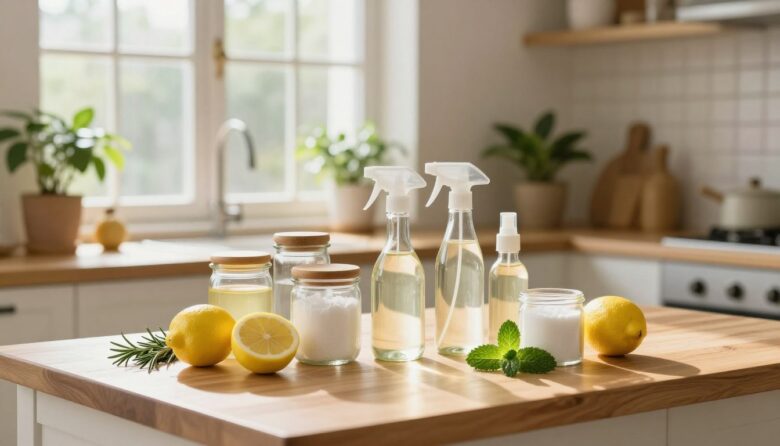
With just a handful of pantry items, you can assemble versatile solutions for most surfaces. This short kit keeps costs low and makes it easy to spray, wipe, and refresh rooms without fuss. Use these staples as the base for many cleaners and to tweak strength or scent.
The Role of Distilled Water
Distilled water is the best choice for homemade cleaners because it lacks minerals and bacteria found in tap water. That helps keep solutions clear and extends shelf life.
When mixed with a mild soap or a touch of castile soap, distilled water forms a gentle cleaner that works on glass and general surfaces without streaking.
Understanding Vinegar and Baking Soda
White vinegar acts as a deodorizer and mild disinfectant thanks to its acidity. It helps break down grime on tile and glass.
Baking soda is a mild alkali scouring powder useful for scrub jobs and baked-on food. Always test a baking soda water solution on a small, hidden area before wider use.
- Distilled water — extends shelf life and reduces bacteria.
- Distilled white vinegar — deodorizes and disinfects surfaces.
- Baking soda — gentle scouring for ovens and pans.
- Castile soap, essential oils (tea tree or lavender), and a glass spray bottle for storage.
Safety Guidelines for Mixing and Storing Solutions
A few smart habits keep your DIY solutions effective and your indoor air safe to breathe. Follow these steps before you mix or store any bottles.
Avoiding Toxic Chemical Reactions
Never mix ammonia and bleach together. That combination creates highly toxic fumes that are dangerous to inhale.
- Work in a well-ventilated area to protect air quality and reduce fume buildup.
- Label every bottle clearly and keep mixtures away from children and food storage.
- Some essential oils can be oils harmful to small animals—check before adding them to mixes to avoid harmful pets exposures.
- Never mix bleach with anything other than water; mixing bleach with other chemicals can release dangerous gases.
- Keep original chemicals in their original containers to prevent accidental ingestion or improper mixing of unknown items.
Simple precautions go a long way. Clear labels, good airflow, and careful handling reduce risks and keep your space safer for everyone.
Simple Recipes for an All-Purpose Cleaner
A few basic mixes make a powerful all-purpose spray you can tailor quickly.
For a strong all-purpose cleaner, combine 3 tablespoons white vinegar, 1/2 teaspoon washing soda, and 1/2 teaspoon castile soap in 2 cups of warm water. Pour into a spray bottle and shake before use to blend the ingredients.
If you want a moderate cleaner for regular messes, mix 2 tablespoons borax with 1/4 cup vinegar and 2 cups hot water. Let the borax dissolve, then transfer to a spray bottle and label it.
- Always shake the spray bottle well before each use to reunite the ingredients.
- Add 12–20 drops of essential oil for scent and a slight boost in cleaning power.
- Adjust potency: use less vinegar for delicate surfaces and more for oily spots.
- Use castile soap or phosphorous-free dish soap as the surfactant to lift grease and grime.
- Test any mix on a small area before wider use, especially on porous finishes.
These simple DIY cleaners save money and let you control strength. Keep bottles labeled and store them away from heat and children.
Specialized Cleaning Solutions for Every Room
A few tailored mixes cover tough kitchen grease, bathroom grout, and wood polish jobs. Pick a simple base and adapt it for each surface to save time and get better results.
Kitchen Surface Care
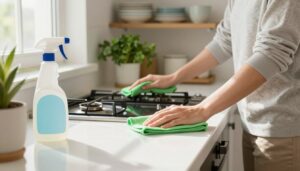
For counters, an all-purpose cleaner made from distilled water, a splash of distilled white vinegar, and a drop of dish soap works well. Use citrus oils like lemon to cut grease and add a fresh scent.
Sanitize cutting boards by spraying vinegar, then follow with 3% hydrogen peroxide spray. Do not mix them in one bottle.
Bathroom and Tile Maintenance
To tackle mold, scrub with a stiff brush, castile soap, and baking soda while wearing gloves and a mask. For tough stains, dilute 1/4 cup bleach in 1 quart water and let sit 15 minutes, then rinse well.
Add a drop of tea tree oil to bathroom spray to fight bacteria and fungi safely.
Polishing Wood Furniture
Polish wood floors by combining 2 tablespoons olive oil, 2 tablespoons vinegar, and 1/4 cup lemon juice. Use sparingly and buff with a soft cloth for shine.
- Stainless steel: dissolve 2 tablespoons baking soda in 1 quart water and wipe clean.
- Store mixes in a labeled spray bottle and test on hidden spots first.
- Adjust strength: dilute solutions more for delicate surfaces.
Tips for Using Essential Oils and Fragrances Safely
Using essential oils safely means balancing potency, purpose, and pet safety before you spray.
Tea tree oil is a strong disinfectant that can fight bacteria, fungi, and some viruses. Use it in tiny amounts and always dilute in water or a carrier oil.
Citrus oils like lemon or grapefruit cut grease and add scent. If you prefer a simple swap, lemon or lime juice also deodorizes well without concentrated oils.
- Always dilute an essential oil: a few drops per cup of water for a mild cleaner.
- Do not spray undiluted oils on skin or glass; test on a hidden spot first.
- Some tree oil blends pair well with small amounts of hydrogen peroxide or vinegar for tougher spots.
- Check labels and vet resources—some oils harmful to pets require avoiding rooms or using alternatives.
Keep bottles labeled and store them safely. When in doubt, use less oil and more water; that keeps scent, safety, and effectiveness in balance.
Conclusion
Stick to a few rules and your three-ingredient mixes will serve you well for months. Use distilled water and white vinegar as a base, and add baking soda or a drop of soap when needed.
Label every spray bottle clearly and store bottles in a cool, dark spot. That helps homemade cleaners last about 3–6 months and keeps air quality steady.
Bring in essential oils like tea tree oil for scent and a small antiseptic boost. If you prefer, hydrogen peroxide works for short sanitizing tasks—never mix it with vinegar in one bottle.
Regular use cuts bacteria on surfaces, saves time, and trims spending on store products. Start small, test recipes, and enjoy cleaner air and better results.

I’m Daniel Carter, a designer based in Chicago with a passion for making small spaces work smarter. After years of living in cluttered apartments, I started experimenting with simple, low-cost organization systems that actually stuck. At Daily Dicas, I share what worked for me — practical tips for anyone who wants their home to feel calmer, more functional, and more intentional.