Anúncios
Ready to tackle a major refresh? This guide gives a smart, step-by-step plan to restore order and shine across your house. It keeps tasks focused so you move room to room without wasting time.
Use proven tools to speed the job. A Swiffer Duster traps dust and hair fast. A Mr. Clean Magic Eraser removes grease and baked-on spills. Run an empty cycle with Cascade Dishwasher Cleaner to clear limescale and odors.
Anúncios
For pet areas, Febreze Fabric Pet Odor Fighter helps neutralize smells. Don’t forget HVAC care: replace furnace filters every three months to keep air fresh and safe.
This concise list will guide seasonal or annual projects. Follow it room by room, and you’ll finish with a truly spotless living space.
– Follow a room-by-room plan and use professional tools.
– Replace furnace filters quarterly and treat appliances for lasting results.
Anúncios
Essential Preparation for Your Deep Cleaning Journey
A smart plan makes big tasks feel manageable; map out your targets first. Set a realistic scope so each session ends with visible progress. Some houses suit a one-day blitz, while others need several short sessions over a week.
Setting Realistic Goals
Pick one or two priority rooms to start. Decide whether you will finish them in a single day or spread tasks out. Use a simple checklist to rank areas by impact — kitchen and bathroom often give the biggest payoff.
Decluttering Before You Start
Sort items into clear categories: keep, donate, discard, sell, and relocate. Tackling clutter first makes surfaces easier to sanitize and speeds the work.
- Set small, timed goals to avoid burnout.
- Create simple categories for belongings to stay organized afterward.
- Gather all supplies before you begin to keep momentum.
- Use a short cleaning checklist that fits your schedule.
- Choose a single room to finish before moving on.
Gathering the Right Cleaning Supplies
Start by assembling a compact set of supplies that will make every task faster and safer.
Pack microfiber cloths, an all-purpose cleaner, a vacuum with attachments, and a broom or mop. These basics tackle most surfaces without damage.
Keep natural options handy: baking soda and vinegar work well for odors and tough spots. Use them sparingly and test on hidden areas first.
A toothbrush or small scrub brush helps reach tight corners and hardware. Include trash bags and donation boxes so you can remove clutter as you go.
- Quality cleaner plus microfiber cloths for safe surface care.
- Vacuum attachments and a scrub brush for detail work.
- Baking soda and vinegar for an eco-friendly refresh.
- Trash bags and donation boxes to manage items quickly.
Prepare this kit before you begin. Having tools in one place keeps momentum and makes the entire process a smoother way to restore your home.
Mastering the Living Room and Common Areas
Tidy living areas set the tone for the rest of your rooms and deserve focused attention. Work top to bottom so dust and debris fall to the floor before you vacuum. This approach speeds the job and leaves surfaces looking their best.
Ceiling Fans and Light Fixtures
Fans and light fixtures collect dust quickly. Use a microfiber cloth or an extendable duster to wipe blades and shades. Turn off fixtures first and support each blade with a hand to avoid bending.
Upholstery and Furniture
Vacuum sofas, chairs, and cushions with an upholstery tool to remove pet hair and crumbs. Treat visible stains with a recommended cleaner made for the fabric or leather.
Don’t forget walls and baseboards. A damp cloth removes buildup and odors that settle on vertical surfaces. Finish by vacuuming or mopping floors to capture all fallen dust.
- Dust ceiling fans and light fixtures regularly to cut allergens.
- Vacuum upholstery thoroughly, focusing on crevices.
- Wipe walls and baseboards to brighten the room.
- Use a furniture cleaner to protect wood and metal pieces.
- Keep floors maintained in high-traffic areas for a healthier space.
Deep Cleaning Checklist Home Strategy for Kitchens
Tackle the kitchen first to improve daily routines and appliance performance. Focus on appliances, storage, and sanitation so the room becomes safer and easier to use.
Appliance Deep Cleaning
Scrub the oven to remove baked-on spills and grease. Empty the freezer and discard items older than six months to protect food safety.
Clean the dishwasher filter, then run an empty cycle with a specialized cleaner to remove limescale. Freshen the garbage disposal by tossing in lemon peels or ice cubes.
Cabinet and Drawer Maintenance
Empty cabinets and drawers, vacuum crumbs, and wipe shelves with a mild cleaner or a vinegar solution. Replace liners and return items in an organized way.
Sink and Faucet Sanitation
Sanitize countertops, the sink basin, and faucet hardware. Use vinegar to tackle mineral deposits and a gentle soap for regular wipe-downs.
- Wipe walls, baseboards, and the refrigerator door for a full finish.
- Pay attention to small surfaces and knobs to cut germs and build-up.
- Follow a simple routine so floors and countertops stay fresh after each use.
Refreshing Your Bedrooms and Closets
Start your bedroom refresh with the mattress and work outward to shelves and floors. Vacuum mattresses along seams and edges, then rotate or flip them to even wear. This simple step helps reduce dust and extends mattress life.
Launder all bedding—sheets, pillowcases, comforters, and pillows—following each care label. Clean fabrics regularly to cut allergens and keep the room feeling fresh. Wash rugs and curtains on a schedule to trap less dust.
Empty closets so shelves can be wiped and dusted. Vacuum closet floors to remove lint and debris that builds up behind boxes and footwear. Organize items back by category to make daily upkeep easier.
- Vacuum the mattress and rotate it every few months for even wear.
- Dust and polish bedroom furniture like dressers and bedside tables.
- Wipe baseboards and glass surfaces, including mirrors and windows.
- Vacuum floors and closet shelves after clearing items out.
- Wash rugs and curtains periodically to keep the room healthy.
Finish by wiping high-touch surfaces and straightening decor. A tidy, well-ventilated room sets a restful tone and makes future cleaning quicker.
Sanitizing Bathrooms for a Sparkling Finish
Small, focused steps in the bathroom yield big results for fixtures, tile, and mirrors. Start by airing the room and removing toiletries from counters so surfaces are easy to access.
Tile and Grout Restoration
Scrub tile and grout with a baking soda paste or a mild cleaner to lift mildew and stubborn soap scum. Apply the paste, let it sit for a few minutes, then scrub grout lines with a toothbrush for best results.
Rinse thoroughly with warm water and dry to prevent new stains. Use a streak-free glass cleaner on mirrors and faucets to remove water spots and restore shine to glass and metal fixtures.
- Sanitizing the bathroom eliminates soap scum and mildew from every surface.
- Use a toothbrush for grout to remove grime and stubborn stains between tiles.
- Launder shower curtains and bath mats regularly, or replace them if mold appears.
- Apply baking soda and vinegar on shower walls for a natural, effective solution.
- Clear out cabinets and toss expired toiletries to keep the room functional and organized.
Tackling Entryways and Laundry Rooms
Entryways and laundry areas see heavy traffic and need focused attention to stay fresh.
Begin by pulling the washer and dryer out a few inches. Check for lint and trapped debris, and clear the dryer lint trap fully. Be careful with any water lines when you move machines.
Empty entryway closets and vacuum to remove dust and grit from daily foot traffic. Wipe baseboards and mop or vacuum the floors so dirt does not spread to other rooms.
- Use disinfecting wipes on door handles and light switches to cut germ transfer.
- Organize cabinets and shoe storage to keep the area tidy and easy to maintain.
- Regularly vacuum behind the washer and check shelves for lint build-up.
Add this step to your cleaning checklist to keep high-traffic zones sanitary and welcoming. Small, steady care prevents larger jobs later.
Outdoor Spaces and Exterior Maintenance
Give your outdoor spaces a seasonal refresh so they look great and last longer.
Start by removing window screens and scrubbing them gently with soapy water. This restores airflow and reduces trapped dirt. Next, wash windows with a vinegar solution for a streak-free shine that lifts grime from glass and frames.
Wipe down outdoor furniture with a mild cleaner. Hose cushions and let them air-dry in the sun to prevent mildew. Clean fixtures like lights and porch hardware so they stay bright and work reliably.
- Sweep patios and decks, then scrub stubborn spots with soap and a stiff brush.
- Include this step in your seasonal checklist to keep the yard ready for guests.
- Check window tracks and clear debris, and clean the filter on outdoor vents to maintain airflow.
Small, regular care saves time later and helps surfaces last through changing seasons.
Specialized Care for Kid Playrooms
Keep play areas sanitary so kids can enjoy safe, clutter-free playtime. A few targeted steps protect health and make the room easier to maintain.
Sanitizing Toys and Plushies
Sanitize plastic toys by soaking them in a solution of a few drops of bleach per gallon of water. Rinse well and air-dry before returning toys to use.
Hand-wash soft plushies with gentle detergent and let them air-dry. A hair dryer on low can fluff fur back up after drying.
- Move furniture to vacuum beneath playpens and tables. This finds hidden dust and spots that attract stains.
- Use a Mr. Clean Magic Eraser to remove crayon marks and other wall stains quickly and safely.
- Organize books and toys into bins so kids can help keep the space tidy and learn routines.
Simple, regular care of toys and furniture makes this room healthier and keeps playtime pleasant for everyone.
Managing Pet Areas and Odors
Pets bring joy, but their spots need routine care to keep your room fresh and inviting.
Start by vacuuming pet beds, couches, and rugs to lift hair and dander. Sprinkle a light layer of baking soda on upholstery and pet beds, let it sit overnight, then vacuum it up to neutralize odors.
Wet-mop hard floors near litter boxes and food bowls to collect loose hair and residues that a dry vacuum may miss. Pay special attention to corners and baseboards where fur gathers.
- Treat pet beds regularly: launder according to labels, and replace worn bedding when needed.
- Vacuum soft surfaces thoroughly, then use baking soda for odor control in the room.
- Mop floors around pet zones to remove dander and keep the house smelling fresher.
- Rotate toys and wash washable items to prevent lingering smells and stains.
Managing pet areas as part of your regular deep clean keeps the whole home healthier. Small, steady steps make maintenance fast and reduce the need for major overhauls later.
Cleaning Windows and Window Treatments
Bright, streak-free windows change how a room feels and invite more natural light.
Wash glass with a quality glass cleaner or a vinegar and water solution for clear, streak-free results. Wipe with a microfiber cloth and follow horizontal strokes on one side and vertical on the other to spot streaks fast.
Vacuum window tracks and frames using a narrow attachment or a small brush to remove trapped dust and debris. This keeps windows operating smoothly and prevents buildup along walls and sills.
Dust blinds and launder curtains per their care labels to improve air quality. Clean treatments protect fabric and reduce allergens that settle on nearby baseboards and other surfaces.
- Cleaning windows and window treatments lets more light in and improves your view.
- Use a glass cleaner to remove streaks and water spots from all window surfaces.
- Keep tracks, frames, and baseboards dust-free to maintain a polished look.
- Wash blinds and curtains regularly to remove accumulated dust and refresh the room.
Maintaining Floors and Carpets
Well-maintained floors reduce allergens and brighten interiors instantly. Regular care keeps surfaces durable and inviting.
Vacuum rugs and carpets thoroughly each week to lift dust and loose debris. For stubborn soils or pet areas, shampooed or steam-cleaned carpets remove deep-seated dirt and odors.
Sprinkle baking soda on carpeted areas, let it sit overnight, then vacuum in the morning to neutralize smells. This simple step restores freshness without harsh chemicals.
Hard surfaces need attention too. Sweep before you mop to remove grit, then use a suitable floor cleaner to lift grime and protect finishes. A damp mop and the right product preserve sheen and reduce wear in high-traffic zones.
- Vacuum rugs and carpets regularly; use a steam cleaner for deeper restoration.
- Apply baking soda to neutralize odors; vacuum after it settles.
- Sweep then mop hard floors with a quality cleaner to remove grime.
- Address spills quickly to prevent stains and extend floor life.
- Routine care prevents dust buildup and supports healthier air quality.
Organizing Storage and Decluttering
Set aside an hour to sort a single closet or bin. Work in short bursts so decisions feel easy and fast.
Clear out rarely used items and group them into keep, donate, or discard piles. This frees space and cuts visual clutter.
Wipe down shelves after removing contents to reduce dust and make surfaces look refreshed.
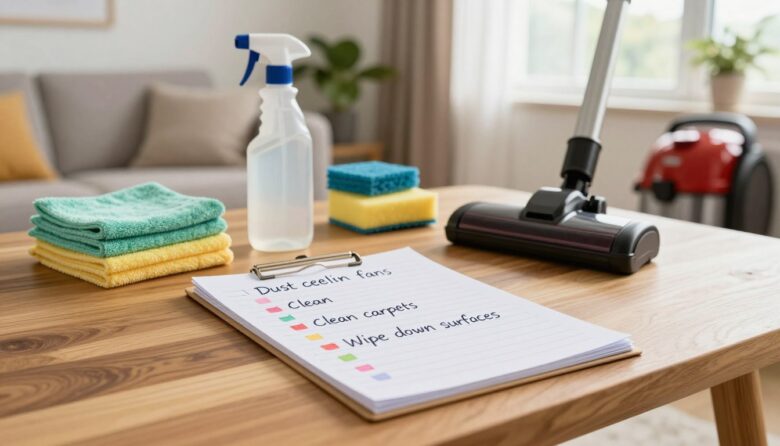
Use a simple checklist to guide each pass. A list helps you move through items without overthinking every choice.
- Organize storage areas so you can find items quickly.
- Dust and tidy shelves to prevent buildup and improve order.
- Donate or discard items you no longer use to free up space.
- Keep one small bin for items to evaluate later to avoid hasty decisions.
- A tidy storage system makes routine upkeep faster and less stressful.
Safety Protocols for Chemical Use
Using strong cleaners calls for a few simple safety habits. Follow these steps to protect yourself and the people in your living space.
Always read the product label before you begin. Labels list proper uses, surface limits, and first-aid steps if something goes wrong.
Keep air moving. Open windows and run fans when you use any potent product so fumes do not build up in the room.
- Wear gloves when scrubbing to prevent skin irritation and avoid direct contact with harsh ingredients.
- Never mix different products; blending solutions can create toxic fumes or dangerous reactions.
- Store chemicals out of reach of children and pets in a well-ventilated area.
- Use a single product for the task it names; switching or combining cuts effectiveness and raises risk.
- If you feel dizziness, headache, or throat irritation, leave the room and get fresh air immediately.
Following these simple rules keeps your space safe while you refresh surfaces and maintain a healthier environment in your home.
Seasonal Maintenance Tasks
As the seasons shift, a few targeted chores protect your property and comfort. Focus on exterior care first: clear gutters, mow the lawn, and tend the garden so water drains and plants stay healthy.
Inside, replace furnace filters every three months to keep systems efficient and air quality high. Sweep chimneys before colder months and store outdoor furniture after a good rinse with a gentle cleaner.
Don’t forget high spots. Dust high areas like the ceiling and vents to reduce airborne particles that settle on surfaces.
- Seasonal maintenance supports your overall deep cleaning routine year-round.
- Replace furnace filters quarterly to protect HVAC performance and indoor air.
- Use baking soda to freshen closets, drawers, and fabrics during transitions.
- Address exterior items—gutters, patios, and garden beds—each season.
- Keep a seasonal plan so small tasks stay manageable and your space stays clean.
Conclusion
Finishing this project gives you a clearer space and a straightforward plan to preserve it.
By following the comprehensive deep cleaning checklist in this guide, you have refreshed each room and boosted comfort. Keep a short cleaning checklist nearby to schedule quick touch-ups and prevent buildup.
Use a simple list to stay organized and focused. Consistent, small efforts beat occasional marathons and save time long term. Enjoy your refreshed rooms and the peace that comes with a well-kept living space.

I’m Daniel Carter, a designer based in Chicago with a passion for making small spaces work smarter. After years of living in cluttered apartments, I started experimenting with simple, low-cost organization systems that actually stuck. At Daily Dicas, I share what worked for me — practical tips for anyone who wants their home to feel calmer, more functional, and more intentional.