Anúncios
I live in an 800 sqft home and share a single 5’x3’x8’ closet that causes daily design agony. Finding clothes each morning became a problem that ate time and added stress.
This short guide offers practical ideas to turn that tiny area into a functional place. Even if you tend to be messy, a few simple systems can help you see every piece of clothing. The goal is to save time and stop wasting valuable room.
Anúncios
We’ll walk through steps that match your lifestyle and needs. You’ll learn how to address the root issue and create a calm, useful area where you can actually find what you need without hassle. With clear methods, the lot of work becomes doable and even satisfying.
The First Step to Mastering Closet Organization Small Space
Begin with a full removal of items to see exactly what you own. An empty area acts like a blank plan. It makes decisions faster and cuts the guesswork.
Decluttering Your Wardrobe
Sort everything into keep, donate, or sell piles. If you haven’t worn a piece in over a year, let it go. The author donated and sold many items to avoid landfill waste.
Anúncios
Sorting Items by Category
- Take pants, sweaters, sweatshirts, and dresses and group them together.
- Use quality hangers to save room and keep pieces neat.
- Be honest: remove things that don’t fit or are out of style.
- Keep similar items together so you spot duplicates quickly.
Clearing out this lot gives you more room for what you wear. Spend a little time now and you’ll save a lot of time later.
Assessing Your Storage Needs and Selecting the Right System
Assess how many hanging items, folded pieces, and shoes you truly own. Count shirts, pants, sweaters, and sweatshirts so you can choose a system that fits real needs.
Measure width, depth, and height of the area. That makes buying shelves, rails, or a wood kit affordable and precise. The author chose the IKEA ALGOT replacement, BOAXEL, for modular flexibility.
Consider adding a MALM 3-Drawer Dresser for socks, underwear, and tees when you have a lot of items. A dresser frees hanging rails for dresses and jackets and keeps folded clothing tidy.
- Pick a system with adjustable shelves and rails to maximize vertical storage.
- Use the area under your bed for seasonal items to free up room inside.
- Measure first so shelves and closet storage components fit without wasted square footage.
With the right mix of shelves, rails, and a compact dresser, you’ll create a place for everything. That reduces morning stress and saves time when getting dressed.
Maximizing Vertical Space and Door Storage
Rethink how you use height and doors to reclaim hidden holding power. Use the top area and door backs to free up the main hanging zone and make your morning routine faster.
Utilizing Top Shelves Effectively
Reserve the top shelf for bins with seasonal gear, extra linens, or items you rarely need. Clear, labeled bins keep small items from disappearing in the back.
Installing Hooks and Racks
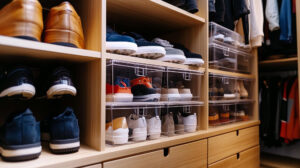
Mount hooks and slim racks on the inside of the door to hold belts, hats, and jewelry. A hanging shoe rack or wall-mounted shoe shelf solves shoe clutter without losing floor room.
Choosing the Right Hangers
Swap bulky plastic for velvet hangers to fit more pieces and stop slipping. Add a straight rail for pants and a stacked shelf for folded sweaters to keep everything wrinkle-free.
- Use bins on the top shelf for items you use only occasionally.
- Install door hooks or a slim shoe rack for better accessories and shoe storage.
- Switch to velvet hangers to maximize hanging clothes capacity.
Creative Solutions for Overflowing Clothing and Shoes
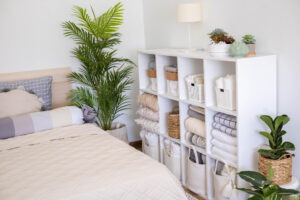
When your hanging rails fill up, use the room under your bed to reclaim useful storage. This area works well for bulky sweaters, sweatshirts, and seasonal pants that crowd closet shelves.
Implementing Under Bed Storage
Start with clear bins so you can see what you have without pulling everything out. Rotate off-season items to free hanging room and keep daily clothing easy to reach.
- Use low-profile bins or a slim shoe rack to maximize space under the bed.
- Store sweaters and sweatshirts in clear bins; add labels for fast access.
- Keep a dedicated shoe rack or basket to stop shoes from becoming hazards in your bedroom.
- Consider wood shelves or wire racks if you need a sturdier system for heavier items.
These ideas turn wasted floor area into practical closet storage. A simple routine to rotate and store clothes saves time and makes every item easier to find.
Final Thoughts on Maintaining Your Organized Closet
Treat this as a routine, not a one-time project, and you’ll enjoy faster mornings. Spend 10–15 minutes each week to return hangers, tidy the rack, and pair shoes with their place.
Regularly declutter to remove items you no longer wear. Use the top shelf and labeled bins for seasonal gear, then reset sweaters, sweatshirts, and pants into their categories when things drift.
Keep testing ideas that fit your needs. Adding a shoe storage solution or using bed bins can free more usable space. Small, steady habits protect the system you built and save time every day.

I’m Daniel Carter, a designer based in Chicago with a passion for making small spaces work smarter. After years of living in cluttered apartments, I started experimenting with simple, low-cost organization systems that actually stuck. At Daily Dicas, I share what worked for me — practical tips for anyone who wants their home to feel calmer, more functional, and more intentional.