Anúncios
Making a cozy, functional area in tight quarters starts with a clear plan and a few smart choices. I once lived in a converted triple dorm that was meant for two people, so I know how much good furniture and tidy storage can change how a place feels.
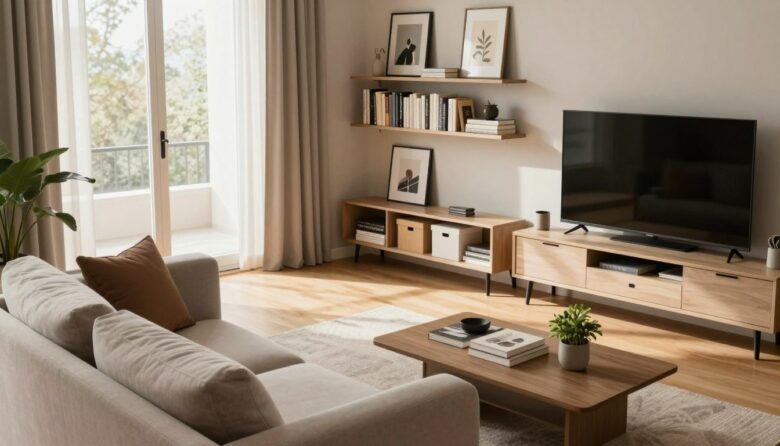
Choose pieces that work hard: a nesting coffee table, dual-purpose shelving, and light colors on the wall help open the floor and lift the mood. Focus on vertical options and clever tables so your rooms stay neat without losing decor or comfort.
Anúncios
The Art of Decluttering Your Living Space
Start by removing things that do not serve you; that simple act changes how an area works and feels. When I lived in a two-bedroom townhouse, I had to push the dining table into a corner to fit a pack-n-play. That forced me to be ruthless with items so the living room stayed functional for our family.
Purging is the most direct way to reclaim your room. Evaluate each piece and ask: does this bring joy or serve a purpose? If not, let it go. The result feels liberating and practical.
Maintaining a minimalist mindset is ongoing. Be intentional about new purchases and create a dedicated spot for belongings so clutter doesn’t creep back into your small living room.
Anúncios
- Designate bins for donate, sell, and keep.
- Review toys and textiles monthly to avoid buildup.
- Keep flat surfaces clear to preserve a calm living space.
Defining Functional Zones in Small Rooms
Carving distinct areas inside a compact place helps each activity feel intentional and calm.
Start by assigning a clear purpose to each corner: a work nook, a play area, and a spot to relax. A portable IKEA RASKOG rolling cart is perfect for a flexible zone that can tuck away when you need open floor.
A well-placed side table or a narrow table can mark a boundary without blocking flow. Rugs or a floor lamp also help the eye separate functions so the living room feels cohesive.
Keep furniture placement strategic. Angling a sofa or backing a shelf to create a tiny study makes the entire space more useful. This approach will make your small living room feel larger and more ordered.
Try these quick tips:
- Use a rolling cart in a corner to hold work or craft items.
- Add a side table to define a reading area.
- Layer a rug and lamp to signal a cozy area.
- Place seating to open walkways and improve room feel.
Maximizing Vertical Storage Potential
Think vertical: using wall storage quickly frees up valuable floor area and changes how your room feels.
Installing wall-mounted shelving keeps items off the floor, making the area look airy and neat. The author installed the IKEA BOAXEL system in three closets to prove this works. That same approach translates well to a living room where every inch matters.
Use high shelves for books and decor to draw the eye up and make the ceiling feel taller. Add hooks and slim cabinets on a single wall to keep essentials within reach without crowding the floor.
- Turn unused wall into useful storage with mounted shelves and rails.
- Choose modular systems like BOAXEL to adapt as needs change.
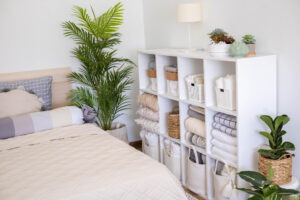
- Mix open shelving and closed bins to balance display and hidden storage.
Choosing Multi-Functional Furniture for Small Spaces
When every inch counts, choose items that work harder than they look. Multi-functional furniture adds storage and keeps a living room tidy without crowding the floor.
Look for ottomans with lift-up tops to hide blankets, games, or cords. A coffee table with hidden storage tucks away magazines and remote controls. Pick a side table that doubles as a narrow cabinet for chargers and small items.
- Choose pieces that serve at least two purposes to reduce clutter and add utility.
- Invest in high-quality furniture to ensure durability in tight spaces.
- Select items with concealed storage to keep essentials out of sight but within reach.
Every piece should be chosen with care so the room feels open and functional. Thoughtful choices let a small living room stay stylish while giving you the storage you need.
Creative Ways to Clear Floor Space
Clearing open floor makes a home feel larger and keeps daily cleaning quick. A tidy surface lets you sweep and vacuum in half the time.
Start by lifting items off the ground. Use wall hooks for backpacks and mugs. Add corner shelving to hold baskets, plants, or books.
Choose furniture that elevates storage. A slim console with legs or a floating shelf keeps valuables off the floor while keeping them within reach.
- Turn corners into useful nooks with angled shelves.
- Hang everyday items so they don’t end up in piles on the floor.
- Use baskets or bins on wall-mounted units for quick tidy-ups.
These simple storage ideas help a small living room feel open. When more items are lifted, the room feel improves and guests notice the difference.
Selecting Pieces with Hidden Storage
Smartly concealed storage makes daily tidying far simpler and faster. Picking the right pieces lets you hide clutter without sacrificing style.
Ottomans and Coffee Tables
Choose an ottoman with a lift-top lid to tuck away blankets, games, and remotes. A coffee table with drawers or a lift mechanism keeps magazines and chargers out of sight.
These coffee tables and ottomans act like silent helpers. They save storage space while keeping the area guest-ready.
Storage Beds and Consoles
Storage beds offer deep drawers in the side paneling and footboard. They are ideal when you need extra storage for seasonal items or family linens.
Pair a slim console or a side table with built-in shelves to hold books or decor. The right furniture piece can transform any room into a tidy, calm home zone.
- Pick dual-use furniture to maximize utility.
- Look for lift tops, drawers, and hidden compartments.
- Use consoles and side tables to keep everyday items organized.
Using Color and Light to Expand Your Room
A clever paint choice and layered light can instantly alter how big and welcoming your area feels.
Paint light tones on the wall to reflect daylight and make the room feel larger. A neutral rug and glossy accents bounce light and calm the decor palette.
For contrast, try a bold ceiling color. A deep, relaxing hue overhead can define a seating zone while making the overall area feel elegant and taller.
- Light walls plus reflective decor increase brightness and open visual lines.
- Neutral rugs help unify floors so the floor plan reads as one continuous field.
- Use targeted lamps and layered lighting to highlight zones and brighten corners.
- Pick colors to mark different functions without blocking flow.
Good lighting is essential; it showcases textiles, art, and plants while making the whole area inviting. With thoughtful colors and lights, even a compact spot can feel airy and much larger.
Strategic Furniture Placement for Better Flow
Place furniture deliberately to make traffic flow feel effortless and natural. This makes the area easier to use and keeps the floor clear for movement.
Turn chairs to face the sofa to encourage conversation over screen time, as designer Amanda Jacobs suggests. Arrange the coffee table and seating so family members can chat without stretching or shifting seats.
Keep major pieces away from main walkways. This improves the room feel and helps people move through the place without bumping into legs or trays.
- Anchor seating with a side table to balance the layout.
- Match the scale and colors of furniture pieces so the floor plan reads as one calm field.
- Leave clear paths to doors and high-traffic zones for smoother movement.
Prioritize flow when you arrange each item. Thoughtful placement makes a small living room feel larger and keeps the home welcoming and easy to use.
Incorporating Wall Decor and Shelving
Decorating high walls gives you big impact with almost no impact on the floor. Use art, a mural, or tall curtains to create a charming focal point that draws the eye upward.
Designer Sarah Stacey used a mural and long curtains to transform a corner in a small living room. Her approach shows how wall decor can change the mood and make a compact area feel curated and calm.
Wall-mounted shelves display favorite decor items and free up floor furniture. Shelves also add hidden storage when paired with woven bins or small boxes.
- Mix open shelves and a few closed bins to balance display and tidy storage.
- Choose colors that match textiles and table finishes for a cohesive look.
- Mind scale: pick art and shelving that enhance the room, not overwhelm it.
Essential Living Room Organization Small Space Habits
Daily habits shape how tidy and welcoming your compact seating area feels.
Start by clearing floor space each day. A quick sweep or putting away items makes the room feel larger and more calm.
Use wall-mounted storage and smart furniture pieces to free floor space. Designer Rasheeda Gray mounted a large television flush to the wall to save floor space and cut visual clutter.
Be picky about new items. Only bring in pieces that earn a place. This simple rule stops clutter before it starts.
Pick a coffee table with hidden storage or add a slim side table with drawers. These pieces hold remotes, books, and small things so surfaces stay neat.
- Clear the floor daily to improve room feel.
- Favor wall storage and multi-use furniture for added storage space.
- Choose one coffee table or side table with concealed storage.
- Limit new items and match colors and rugs to make the area feel larger.
Follow these easy ways and the area will feel like a peaceful retreat. With steady habits, even small living rooms can stay beautiful and functional.
Conclusion
A few consistent habits and the right furniture choices can turn a cramped area into a calm, usable home.
.
Start by purging items you no longer need and use vertical storage to reclaim floor area. Define clear zones and pick multi-functional pieces so each corner serves a purpose.
Keep daily routines simple: clear the floor, limit new purchases, and tuck things away each night. Use color, layered light, and thoughtful placement to make the room feel larger and more inviting.
With these small steps, your living area becomes stylish, functional, and easy to maintain. The payoff is a welcoming setting where family and guests feel comfortable and clutter stays in check.

I’m Daniel Carter, a designer based in Chicago with a passion for making small spaces work smarter. After years of living in cluttered apartments, I started experimenting with simple, low-cost organization systems that actually stuck. At Daily Dicas, I share what worked for me — practical tips for anyone who wants their home to feel calmer, more functional, and more intentional.