Anúncios
I learned quickly that tiny living asks for a new way of thinking. When I lived in my first teeny one-bedroom, I had to look up to make the most of every inch.
Over the years, moving from a small townhouse to a three-bedroom home in Arizona and then to Pennsylvania taught me one clear rule: use height to reclaim floor space. Creative storage solutions kept my home tidy and made daily life easier.
Anúncios
In this piece, I’ll share simple, practical tips that turn cramped spots into useful areas. Whether you rent or own, these small changes can boost organization and improve how you live in tight spaces.
The Philosophy of Vertical Living
Looking up can free more usable floor than any drawer or bin ever will. In a small home, the air above a couch or bed is often the most overlooked part of a room.
This way of thinking shifts focus from horizontal piles to the open height in each space. By aiming for the upper walls and corners, you can declutter living areas and add functional design without crowding the floor.
Anúncios
We tend to stash things in drawers and boxes. That habit misses huge potential for vertical storage and shelving that lift items off tables and carpets. Using the wall plane also makes daily life neater and faster.
Think of the ceiling and upper wall as a new frontier. Simple shelves, hooks, and tall cabinets change how spaces look and feel. These ideas let small rooms gain purpose and style while keeping things within reach.
- Use high shelves for less-used items.
- Install hooks to free counter space.
- Layer open and closed options for tidy display.
Essential Vertical Storage Ideas Apartment Solutions
Finding smart ways to use wall height will change how your rooms function. Start by sorting what you own into small, medium, and large sizes. That helps you match each item to the right method.
Small Scale Solutions
Cabinets, shelves, and narrow racks win for small items. Use stacking organizers inside cupboards and hooks on the inside of doors.
These little changes clear counters and keep daily items within reach. Over time they make life simpler and your home neater.
Large Scale Systems
For closets and big rooms, choose tall shelving or modular units that reach toward the ceiling. These systems maximize usable space and handle bulkier goods.
- Match solutions to the sizes of your possessions.
- Mix open and closed options to balance display and concealment.
- Use a plan that can double or triple capacity for better organization.
Maximizing Kitchen Cabinet Potential
Small kitchens get a big boost when cabinet interiors work harder for you. Focus on using the depth and height inside each cabinet so counters stay clear and daily tasks feel easier.
Stacking Drawer Organizers
I used clear acrylic stacking drawers under my sink to hold cloths and sponges. They kept that area tidy without looking cluttered, and I could pull out a single drawer to grab what I needed.
Stacking bins have been one of my favorite storage ideas for the kitchen for more than a decade. When you add these pieces to your cabinets, drawers stop overflowing with random items.
- Use clear bins so you see pantry staples at a glance and avoid buying duplicates.
- Stackable drawers make the most of cabinet space and create neat zones for small items.
- Choose a few modular pieces to manage tools, cleaning supplies, and baking goods.
These simple solutions changed my life in the kitchen. With a few bins and drawer units, each cabinet becomes a planned space that holds more and wastes less.
Creative Wall Mounted Furniture
Wall-mounted furniture can reset how you use small rooms by freeing up floor area instantly. These pieces blend form and function and make tight living spaces feel larger.
One helpful example is the Montana Furniture Studio Secretary Desk. It gives you a tidy workstation that folds away when not in use. That makes it ideal for a renter or anyone who needs a desk without losing square footage.
Fold Down Desks
Fold down desks create a dedicated workspace that disappears after the workday. They keep items off the floor and off your closet shelves, so clothes and boxes stay neat.
Murphy Beds
Murphy beds are a classic solution when a bedroom must double as an office or guest room. Lift the bed against the wall and reclaim the room for daytime activities.
- These storage ideas let living rooms remain versatile and uncluttered.
- Mounting items to the wall keeps closet space and floors clear.
- In my own life, wall-mounted pieces saved space and kept a clean look without sacrificing style.
Utilizing Over the Door Storage
The back of any door can become a tidy command center with the right racks and hooks. This renter-friendly solution needs no drilling and works as a quick, low-cost way to add more usable space.
I have used an IKEA Ställ shoe cabinet to keep my entry clear. It stopped shoes and bags from piling on the floor and kept items easy to grab when I left the house.
Turn a pantry door into a kitchen powerhouse by adding spice racks, cling-wrap holders, and small hooks. These additions clear counters and make the room feel larger without costing much.
- Use over-the-door racks for shoes, hats, or cleaning tools.
- Hang a hairdryer or toiletries on towel-bar hooks in the bathroom.
- Add a slim rack for condiments and wraps on the pantry door.
In my life, using the back of a door was the easiest solution to add extra storage to any room. It frees floor space and keeps busy areas neat and functional.
Floating Shelves for Style and Utility
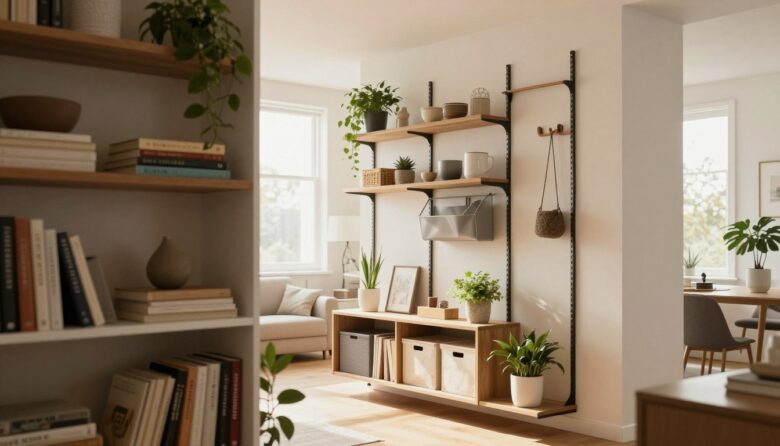
Slim floating shelves turn empty walls into elegant, usable places without crowding the floor. They are a simple way to add both form and function to any room.
In a tight kitchen, floating shelves hold spices, mugs, or cookbooks and free counter space that gets used every day. These shelves work well above sinks or stoves and keep frequently used items within reach.
You can tuck baskets on a lower shelf to hide less attractive items and keep a neat look. Woven baskets soften the line of the wall and give you concealed storage that still feels styled.
- Minimalist display that doubles as a functional shelf solution.
- Frees counter space in kitchens and clears clutter in small rooms.
- Add baskets to hide odds and ends without losing style.
- Draws the eye up and makes rooms feel taller and brighter.
In my own life, I added floating shelves in a guest bath to mix towels, soap, and a plant. They kept essentials handy and made the space feel cared for.
Tall Bookshelves for Floor Space Savings
Tall bookshelves turn an empty wall into a smart, space-saving asset.
Choose height over width and watch a narrow shelving unit free floor space while holding a surprising number of items.
A tall unit becomes a visual anchor in a living room. It draws the eye upward and makes the room feel larger.
In the boys’ townhouse, I used a tall shelving unit to sort toys by type. That method beat one giant toy box. Kids found what they wanted faster, and the floor stayed clear for play.
- Use top shelves for seasonal or seldom-used goods.
- Mix decorative pieces with bins to hide small items.
- Place heavier objects on lower shelves for safety and balance.
These storage ideas work well in tight homes because they hold a lot without taking up much floor space.
With the right shelves, a tall unit can shift from practical to beautiful and become the focal point of a room.
Vertical Garden Installations
Green installations let you use unused wall space to grow herbs and improve air. They make a dull area feel alive and give you easy access to fresh items for cooking or scenting a room.
These planted systems also boost indoor air quality. Plants filter pollutants and raise oxygen levels, which makes a small home feel cleaner and brighter.
Indoor Air Quality Benefits
Use a wall-mounted system to cultivate herbs, ferns, or small pots. A kitchen area with fresh basil or mint is both pretty and practical.
- A planted wall reconnects you with nature and adds useful storage for pots and tools.
- Plants help filter air and lower common pollutants in tight living areas.
- Wall systems adapt to any room—nooks, hallways, or a living room expanse.
- In my life, adding greenery to a tall space made the air feel fresher and healthier to breathe.
Hanging Storage for High Ceilings
When ceilings soar, the space above becomes a practical place to store and display what you use most.
For homes with tall rooms, hanging solutions are a game-changer. They free up floor and counter space while adding a bit of style to your kitchen or living area.
A rustic pot rack suspended from the ceiling keeps pots and pans visible and easy to grab. This single rack replaces bulky cabinets and lets you air out cookware between meals.
- Use hanging racks for frequently used cookware to clear counters and drawers.
- Install a suspended shelf to hold books, plants, or small décor and reclaim wall space.
- Mix hooks and baskets on a ceiling rail to move less-used items up and out of the way.
Moving storage upward makes a room feel calmer and more organized. In my life, hanging items turned wasted airspace into a useful zone and kept surfaces ready for daily use.
Closet Systems for Better Organization
A smart closet system changes how you dress, pack, and plan each day.
Start with a plan that fits the room and your routine. Measure height and depth so shelving and drawers make real use of vertical space and free floor area.
Dresser Integration
Placing a dresser inside the closet saves floor space in bedrooms that share functions. A small chest gives you extra drawers for folded clothing and keeps daily outfits within reach.
In one rental I used the dresser-in-closet trick to create a neat dressing zone. It kept shoes and a few bins under the hanging clothes and cut morning clutter.
Custom Shelving
Custom shelving and modular systems change a messy closet into a reliable system. I installed an EasyClosets setup in my primary closet and fit far more items than I could on wire shelves.
The IKEA ALGOT system, now BOAXEL, is another great option. I used it in eight spaces to maximize every inch and keep clothing sorted by season.
- Compartmentalize by season to make clothing easy to find.
- Mix drawers, cabinet-style bins, and open shelving for a tidy look.
- Use shallow shelves for shoes and deeper drawers for bulkier items.
Rolling Carts for Flexible Storage
A mobile cart keeps essentials close at hand and moves with your routine. It is a simple solution that adds a bit of order without a long project.
Use a cart to hold craft supplies, pantry items, or a coffee station. These storage ideas work well when you need quick access and portability. I used the IKEA PAX system elsewhere to add vertical storage in my home office, which made the room feel built-in and more efficient.
In a dining room, a rolling cart is handy for extra serving pieces or linens for a particular season. In the kitchen it can act as a prep surface and a place to park small appliances between meals.
- Tiered shelving unit lets you stack more items in a tight footprint.
- Choose metal or wood carts with drawers and bins to suit cabinets and décor.
- Move the unit from room to room for multipurpose use.
- In our house, a cart kept the boys’ craft supplies contained and ready for the next project.
Pegboard Systems for Craft and Tool Areas
A pegboard can turn a blank wall into a busy, organized hub for projects and tools.
I used an IKEA Skådis pegboard in my home office to hold craft supplies. It kept small items tidy and within reach. Donnie swapped to The Container Store’s Elfa pegboard and used hooks and trays to separate pens, chargers, and paperclips.
In the garage, these systems work well to hang brooms, mops, and seasonal tools. Mounting a pegboard on the wall converts an unused area into a functional workspace. A single rack or a grid of racks makes gear visible and easy to grab.
- Use a shelving unit above the pegboard for boxes you use by season.
- Mix hooks and baskets to hold varied items and keep them sorted by color or type.
- Arrange a compact unit near a workbench to free floor space and speed projects.
For me, the best part is how a pegboard keeps writing utensils and paint supplies grouped by color. It’s a small change that makes a big weekday difference.
Mirror Placement to Enhance Spatial Perception
Mirrors do more than reflect—they expand sightlines and bring light into tight spots. A well-placed piece can make a living room or dining area feel larger at a glance.
Place a tall mirror against a blank wall to lift the eye and emphasize height. Small items and clutter on a nearby table will look less dominant when their reflection stretches into the room.
Mirrors also bounce natural light into dark corners. That quick boost brightens an area and improves the overall look without moving furniture or adding lamps.
- Use a full-length mirror to create depth and make the floor feel more open.
- Hang a slim mirror beside a window to amplify light and make the best use of sunlit spots.
- Lean a mirrored panel in a closet or entryway so it pulls a room together while you get ready.
In my life, a closet mirror doubled my dressing area and made the space seem twice as big. Thoughtful placement is a simple design trick that changes how you use a home.
Using Decorative Baskets for Hidden Storage
A few well-chosen baskets can hide clutter while adding texture and warmth to a room.
Decorative baskets tuck away items you don’t want guests to see, like takeout menus or season-specific clothing. I often place a set on top of a shelving unit or behind closed cabinet doors to keep counters clear.
These baskets come in many shapes and sizes, so you can match them to a living room shelf, a bedroom unit, or a closet. Layering open bins with lidded baskets makes small items and shoes easy to find without a mess.
- Use matching baskets to tidy a shelf and create a cohesive look.
- Stash seasonal pieces or spare linens in labeled baskets inside a cabinet.
- Top a basket with a throw blanket to hide clutter and add a pop of color.
In my own life, a single basket with a throw on top turned a cluttered bench into a neat, styled spot. It keeps everyday items out of sight and makes the room feel calm.
Smart Tools for Planning Your Space
Before I drilled a single hole, I mapped the room on my phone to see what truly fit. Using a design app made the process simple and less stressful. It also let me test placement without lifting a tool.
Digital mockups are great for storage solutions because they show scale and sightlines. You can try shelves, cabinets, and rails to see how each piece changes a room. This step helps you choose the best vertical storage without guessing.
- Use apps like DecorMatters to visualize the fit of items and heights.
- Plan layouts to make the most of vertical space and avoid buying wrong sizes.
- Experiment with shelves and cabinets to find the right balance of form and function.
- These planning ideas stop costly mistakes and boost confidence before you install.
In my life, previewing solutions on-screen saved money and time. It let me use every inch with purpose and kept projects tidy from start to finish.
Conclusion
Small shifts in how you use walls and ceilings can change daily life at home. They free floor space and make routines simpler.
Implementing these vertical storage choices helps you make the most of every inch. Think up instead of out to craft a space that looks good and works well.
Pick solutions that match your habits and room layout. Start small, be consistent, and enjoy the calm that comes from a tidy, functional home.

I’m Daniel Carter, a designer based in Chicago with a passion for making small spaces work smarter. After years of living in cluttered apartments, I started experimenting with simple, low-cost organization systems that actually stuck. At Daily Dicas, I share what worked for me — practical tips for anyone who wants their home to feel calmer, more functional, and more intentional.